The New Year’s toast at the start of 2026 still feels like it was just the other day.” Yet, after spending the past few
months fully immersed in the present, I find myself reflecting as early March arrives. Around that time, I came across early-blooming Yaezakura, double-flowered cherry blossoms in Tokyo—an encounter that gently stirred a sense of spring within me. Inspired by this shift in season, I stopped by a familiar sake shop in search of a spring release. While it wasn’t labeled as a “spring sake,”one bottle immediately stood out with a remarkable presence: Michi Zakura, Junmai, Fully Ripe Banana Yeast, a limited edition from Micho Zakura Brewery. 🌸
The bottle label is strikingly simple—highlighting a vivid yellow banana motif alongside the words “Fully Ripe
Banana Yeast” and the brand name “Michi Zakura.” The concept of a specially developed banana yeast is both intriguing and memorable, naturally heightening expectations for banana-like aromas and flavors.
Micho Zakura Brewery was founded in 1877 in Nakatsugawa City, Gifu Prefecture, and has a long-standing history. In November 2020, due to aging facilities and the increasing difficulty of temperature control caused by global warming, the brewery relocated from Gifu to a far northern town, Higashikawa in Hokkaido. There, it began a new chapter as a publicly supported, privately operated brewery.
Higashikawa Town, located near the center of Hokkaido, is surrounded by the majestic peaks of the Daisetsuzan mountain
range, including Mount Asahidake, along with beautiful rural landscapes. While expanding its presence across Japan and internationally, the brewery continues to honor the essence of its craft developed in Nakatsugawa—carefully working
with water, rice, and koji, and allowing nature to guide the brewing process.
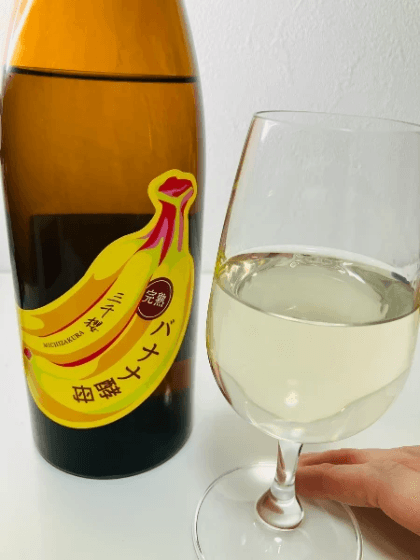
Michi Zakura Junmai – Fully Ripe BananaYeast
Ingredients:
Rice (domestic), rice koji (domestic rice)
Polishing Ratio:
Koji rice: 55%, Kakemai (steamed rice): 55%
Rice Variety: Suisei (Hokkaido-grown sake rice)
(Suisei is a sake-brewing rice developed in Hokkaido and officially registered in 2006.)
About the Yeast
Sake yeast is a type of microorganism that plays a crucial role in the brewing process. It has two primary functions.
First, it carries out alcoholic fermentation, converting sugars into alcohol and carbon dioxide. The yeast feeds on glucose produced when koji mold breaks down the starch in rice, ultimately creating the alcohol in sake.
Second, it produces aromatic compounds,known as ginjo aromas, which can express notes such as apple or banana. These
aromas are an important factor in defining the character of the sake.
The “Fully Ripe Banana Yeast” used in this sake was isolated by the Laboratory of Brewing Science at Tokyo University of Agriculture Junior College. It is a unique yeast strain known for the future of banana-like aroma.
📒 Tasting Notes 📒
Appearance: Pale yellow-green with a slight greenish tint.
Viscosity is medium to slightly high,forming slow legs on the glass.
Aroma: Sweet aromas reminiscent of banana muffins,layered with gentle notes similar to amazake derived from rice koji, along with a mild aroma of steamed rice.
Taste: On the palate, deep banana-like flavors reminiscent of banana muffins, banana shakes, and banana chips spread across the mouth, accompanied by an initial impression similar to ripe melon. A calm structure derived from rice, such as mochi and rice flour, is also perceived. Midway, the texture shifts to a sharper, cleaner profile, preventing the banana
character from becoming too dominant, and leading to a refreshing finish.
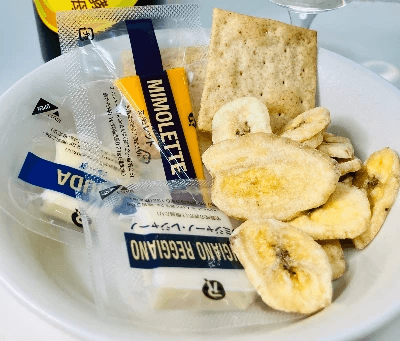
It pairs well with fermented foods, especially cheese. In particular, when combined with Parmigiano Reggiano, the
saltiness, umami, and creamy richness enhance each other, resulting in an exquisite pairing. 🧀🍌🥂
As Someiyoshino—Japan’s most well-known variety of cherry blossoms started to bloom in Tokyo on March 19.
With the lightness of the season, a single,elegant cup of sake. 🌸